
SEAGULL HEALTH
Your health,We care!
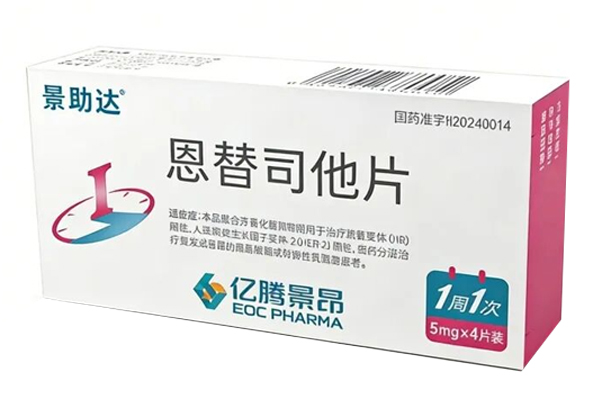
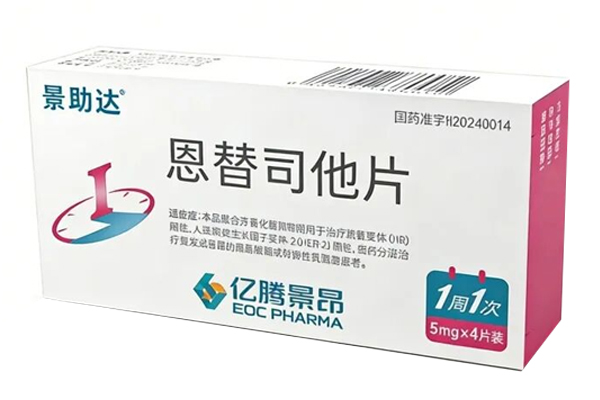
Clinical studies have demonstrated that Entinostat Tablets can effectively prolong patients' progression-free survival (PFS) and overall survival (OS), and also exhibit definite efficacy in populations with resistance to CDK4/6 inhibitors.

 AuthenticGuaranteeFast DeliveryPrivacy
 Entinostat Tablets have been included and recommended in the Guidelines and Standards for the Diagnosis and Treatment of Breast Cancer (2024 Edition) of the Chinese Anti-Cancer Association (CACA), the Clinical Guidelines for the Diagnosis and Treatment of Breast Cancer (2024 Edition) of the Chinese Society of Clinical Oncology (CSCO), and other authoritative guidelines, thus becoming an important therapeutic option for the second-line and subsequent therapy of HR+/HER2- advanced breast cancer.
This product, in combination with aromatase inhibitors, is indicated for the treatment of patients with locally advanced or metastatic breast cancer who are hormone receptor (HR)-positive, human epidermal growth factor receptor 2 (HER2)-negative, and have experienced recurrence or progression following endocrine therapy.
Entinostat Tablets should be used under the guidance of a physician with experience in anti-tumor drug therapy.
Entinostat Tablets are to be used in combination with Exemestane, an aromatase inhibitor.
The recommended dosage of Entinostat Tablets is 5mg, administered orally once weekly; it is recommended to take the medicine on an empty stomach, at least 1 hour before a meal or at least 2 hours after a meal.
The recommended dosage of Exemestane is 25mg, administered orally once daily (see the package insert for Exemestane for details).
Continuous administration is recommended if the disease does not progress and no intolerable adverse reactions occur.
Prior to the administration of this product, complete blood count (CBC) and blood biochemical tests should be performed. Treatment may be initiated only when the relevant indicators meet the following criteria: absolute neutrophil count (ANC) ≥1×10⁹/L, platelet count (PLT) ≥50×10⁹/L. The complete blood count should be monitored regularly during the treatment period.
This product is contraindicated in patients with known hypersensitivity to entinostat or any of the ingredients of this product, as well as in pregnant women.
The most common adverse reactions (≥10%) observed in clinical trials include: decreased neutrophil count, decreased platelet count, decreased white blood cell count, hypophosphatemia, anemia, nausea, fatigue, elevated aspartate aminotransferase (AST), hypoproteinemia, elevated blood glucose, elevated alanine aminotransferase (ALT), elevated γ-glutamyl transferase (GGT), hypocalcemia, elevated blood alkaline phosphatase, diarrhea, anorexia, and hypokalemia.
Pregnancy
There are currently no relevant data on the use of Entinostat in pregnant women. Preclinical animal study results have demonstrated that Entinostat has reproductive toxicity.
Administration of this product is contraindicated during pregnancy. If a patient takes this product during pregnancy or becomes pregnant during treatment, the patient should be informed of the potential risks of this product to the fetus. Women of childbearing potential are advised to take effective contraceptive measures during Entinostat treatment and for at least 3 months after the end of treatment.
Lactation
It is unknown whether this product is excreted in human breast milk. Lactating women are advised to discontinue breastfeeding during treatment with this product and for at least 1 month after the end of treatment.
The safety and efficacy of Entinostat in pediatric patients and adolescents under 18 years of age have not been established, and use of this product is not recommended in this population.
A total of 79 geriatric patients were enrolled in clinical studies conducted in China and Japan. The results showed that the types of common adverse reactions reported were similar to those in younger patients, while the incidence rate of adverse reactions leading to treatment discontinuation was slightly higher in geriatric patients than in younger patients (16.5% vs 12.1%). Physicians may guide medication use or perform dose adjustment based on the comprehensive clinical status of geriatric patients.
For more detailed drug information, please consult the official package leaflet.
If any issues arise, please contact us immediately.
Email:haiousales@gmail.com
Copyright 2024 @ haiouhealth.com All right reserved SEAGULL HEALTH


